A mature pecan tree is more than a source of nuts. With its tall trunk, broad canopy and long life, it can become a defining feature of a landscape and a link between generations. Understanding how this remarkable tree grows makes every handful of pecans feel a little more special.
Pecans come from Carya illinoinensis, a deciduous tree native to North America. If the story behind the food inspires your next snack, you can discover pecans and gifts from a Texas pecan family.
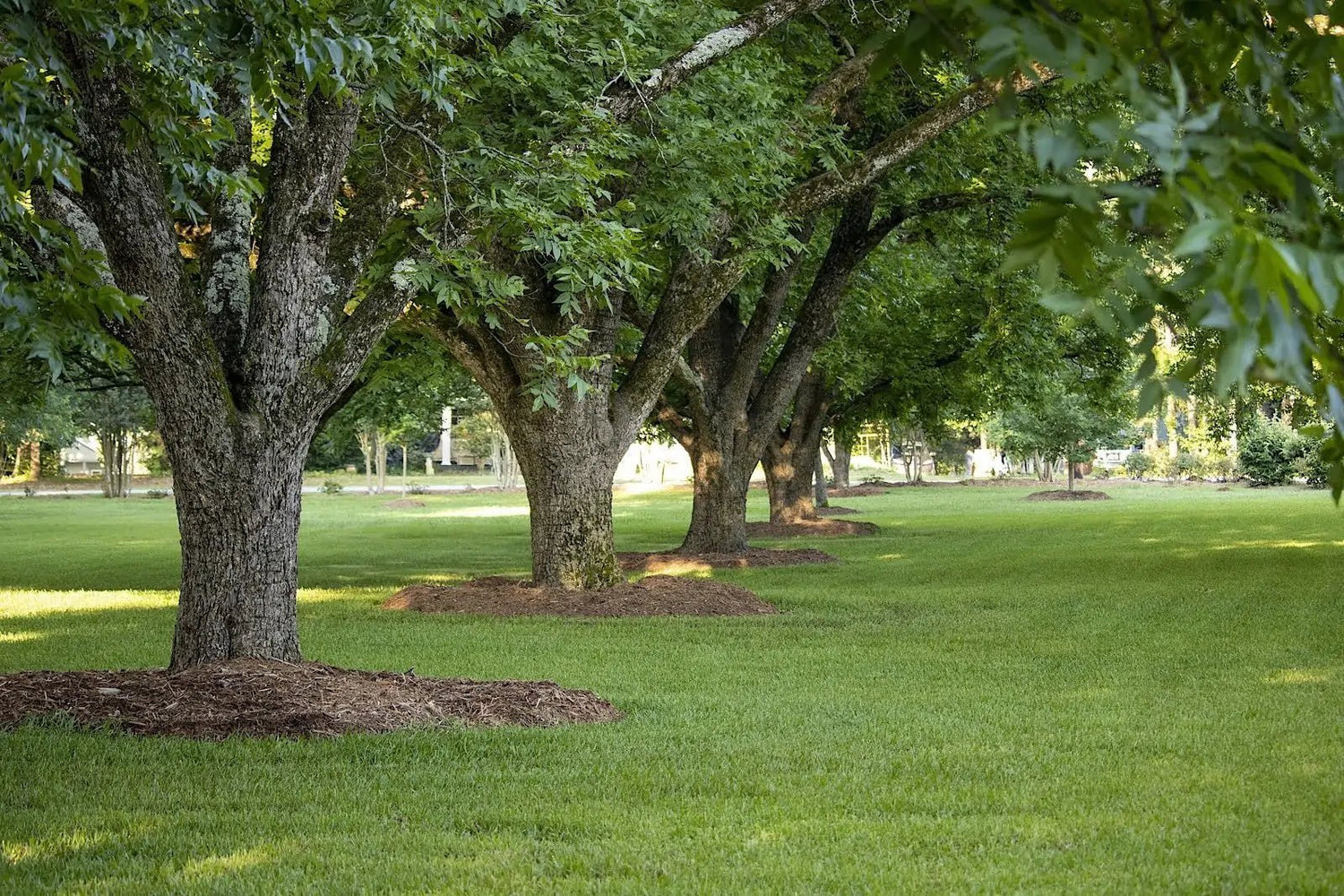
How to recognize a pecan tree
Pecan trees often reach roughly 70 to 100 feet when conditions allow, so they need generous space. Their leaves are compound: instead of one simple blade, each leaf carries a row of pointed leaflets. The foliage creates welcome summer shade before turning and dropping in autumn.
Spring brings separate male and female flowers on the same tree. The dangling male catkins release pollen into the wind, while small female flowers develop at the tips of new growth. Successful pollination leads to clusters of nuts enclosed in green husks.
Climate, soil and water
These trees are closely associated with warm regions that have long summers and relatively mild winters. They perform best in deep, fertile and well-drained soil where roots can spread. Consistent water is particularly important while young trees establish and when nuts are filling, but waterlogged ground can damage roots.
Sunlight also matters. A pecan planted in an open location has a better chance to develop a balanced canopy than one crowded by buildings or competing trees. Because the mature size is considerable, it is wise to think decades ahead when choosing a site.

Why pollination partners matter
Although a single tree produces both kinds of flowers, their timing may not overlap perfectly. Orchard growers often plant compatible cultivars near one another so pollen is available when female flowers are receptive. Wind carries that pollen, which is why variety selection and spacing are important parts of orchard planning.
A young tree requires patience. Grafted pecan trees can begin producing earlier than seedlings, but meaningful harvests still take years. As the canopy expands, careful pruning, soil care and pest monitoring support a strong structure and consistent production.
A tree that can outlive its planter
Well-sited pecan trees may live for a century or longer. That longevity makes them valuable not only as productive orchard trees but also as living landmarks. One generation plants and tends the sapling; later generations may gather nuts beneath a canopy that has shaped the view for decades.
Production naturally varies with weather, tree health and alternate-bearing patterns. A heavy crop one year may be followed by a lighter one as the tree restores energy. Commercial orchards use nutrition, irrigation, pruning and monitoring to reduce stress and protect quality.
From landscape to table
The journey from flower to finished nut is slow, seasonal and dependent on careful stewardship. A pecan tree spends months converting sunlight, water and soil nutrients into kernels protected by husk and shell. Seeing that process makes pecans feel less like a packaged ingredient and more like the harvest of a remarkable living system.
Whether you enjoy them raw, roasted or folded into a favorite recipe, you can explore Millican Pecan's selection of orchard-grown treats and celebrate the work behind each crop.