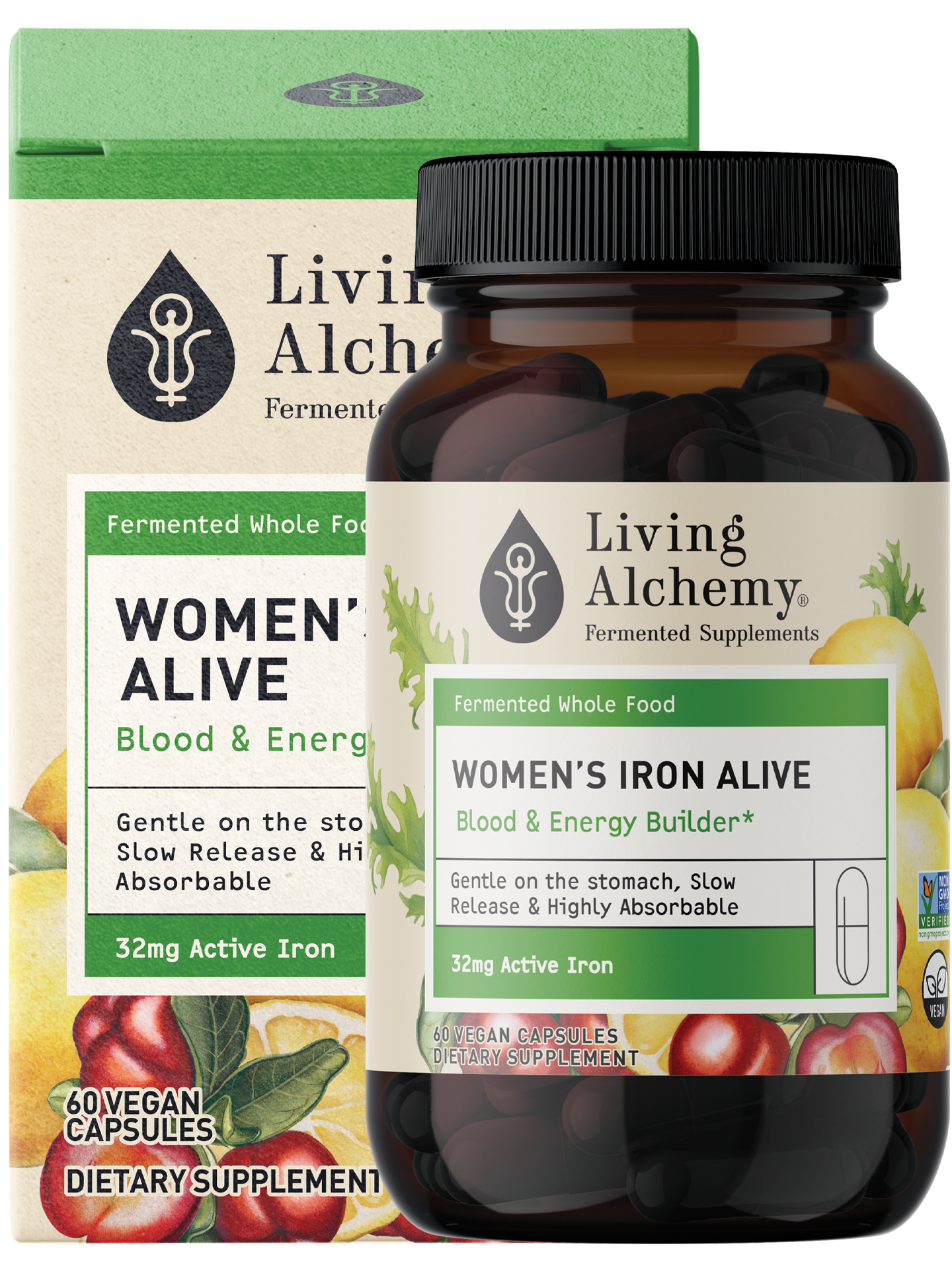
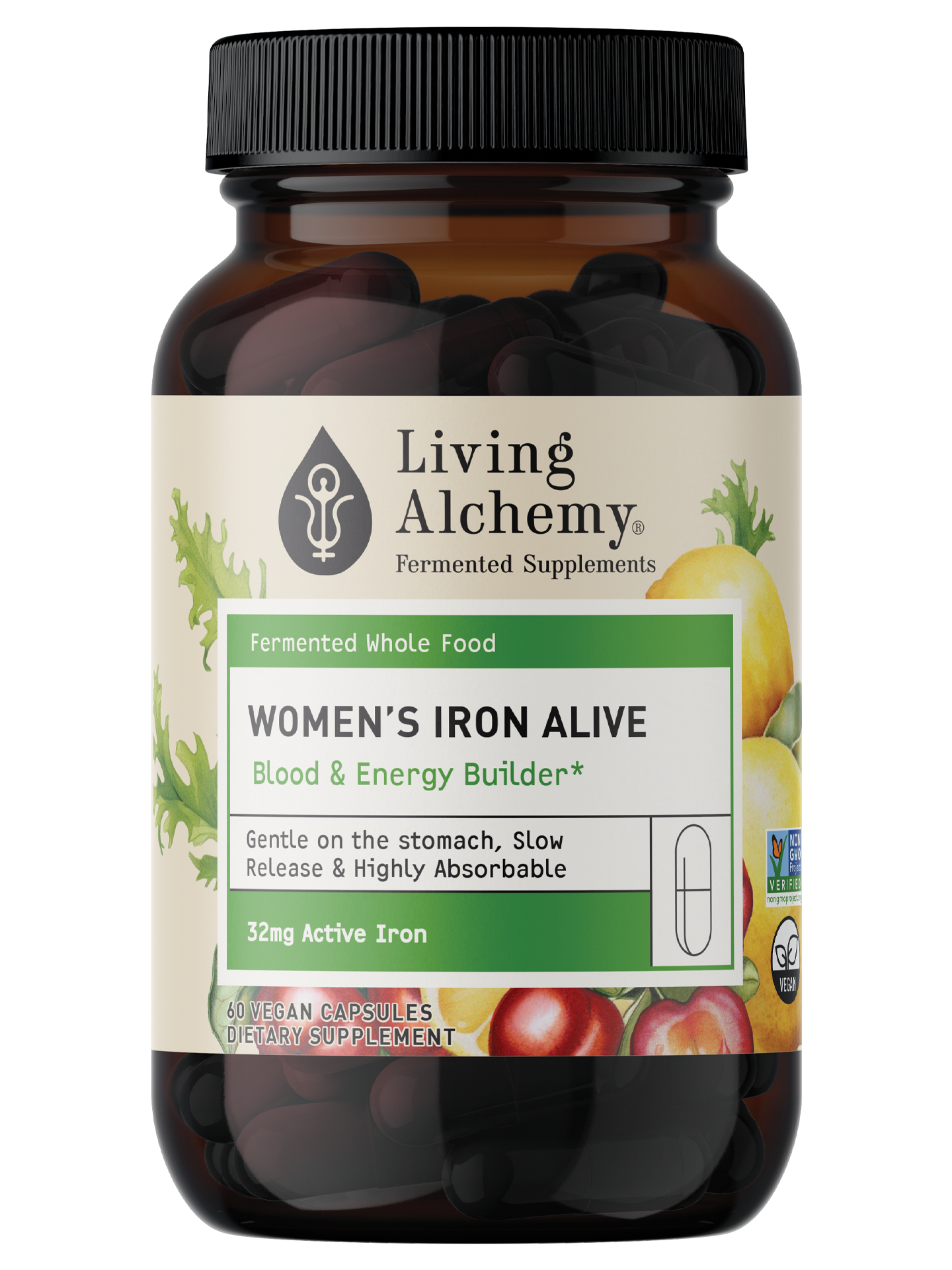
Iron is essential for making hemoglobin, the protein that helps red blood cells carry oxygen. It is also a nutrient that deserves a measured approach: too little can be a problem, but taking iron without a clear need is not automatically helpful. Living Alchemy’s Women’s Iron uses iron produced through koji fermentation alongside several whole-food ingredients.
If you are researching plant-focused supplement options, you can review Living Alchemy’s mineral and women’s wellness range. This guide explains what to examine before making a decision.
Why iron needs vary
Iron requirements differ with age, diet, menstrual blood loss, pregnancy, health conditions and other factors. People who eat little or no animal food may need to plan their intake carefully, while heavy menstrual bleeding can increase the risk of low iron.
Fatigue, weakness and poor concentration can occur with iron deficiency, but they can also have many unrelated causes. Blood testing and professional interpretation are the clearest ways to understand iron status. Supplementing based only on a vague symptom may delay identification of the real issue.
What “koji-fermented” means here
Koji is best known as the cultured ingredient used in traditional foods such as miso and sake. Living Alchemy describes its formula as providing iron through a koji fermentation process, with the goal of creating a food-based mineral preparation.
The product also lists organic acerola cherry, lemon peel and nori. Acerola and citrus ingredients are associated with vitamin C, while nori is a sea vegetable. Check the current package for exact amounts and the complete ingredient list, because formulations and directions may change.
Questions to ask before taking iron
Has a clinician identified a need? How much iron do you already receive from food, a prenatal product or a multivitamin? Are you taking medication that could interact with iron or have a condition that affects absorption or iron storage?
Iron can interfere with the absorption of certain medicines, and timing may matter. It can also cause digestive side effects in some people. Children are especially vulnerable to iron overdose, so every iron-containing product should be stored securely out of reach.
You can check the current Living Alchemy Women’s Iron label here and bring the details to a pharmacist or clinician if you need personalized guidance.
Supporting iron status through food
Iron-rich foods include meat and seafood as well as beans, lentils, tofu, fortified cereals, seeds and leafy greens. Pairing plant sources with foods containing vitamin C can support non-heme iron absorption. Tea and coffee consumed with an iron-rich meal may reduce absorption for some people, so timing can be considered when iron status is a concern.
Food remains the foundation, while a supplement can fill a documented gap or meet a specific life-stage need. The ideal dose and duration depend on the person rather than on a universal routine.
The bottom line
Living Alchemy Women’s Iron offers a distinctive koji-fermented format with acerola, lemon peel and nori. Its ingredient philosophy may appeal to shoppers seeking a whole-food-style option, but the decision to take iron should begin with need, safety and total daily intake.
For complete product details and other wellness options, visit Living Alchemy through this partner link.
For readers comparing fermented whole-food options, explore Living Alchemy’s product range. You can also check the current Living Alchemy options before deciding what fits your routine.