Dachshunds, corgis, and other long-backed dogs are built for charm—and sometimes for back trouble. If your pup suddenly hunches, hesitates before jumping, or yelps when picked up, you may be looking at early signs of IVDD (intervertebral disc disease) or general spinal strain. Catching those signals early gives you more options: rest, vet care, rehab, and supportive gear like a purpose-built dog back brace.
This guide walks through common IVDD red flags, what a brace can (and cannot) do, and why many pet parents choose the WiggleLess Dog Back Brace for everyday spinal stability.
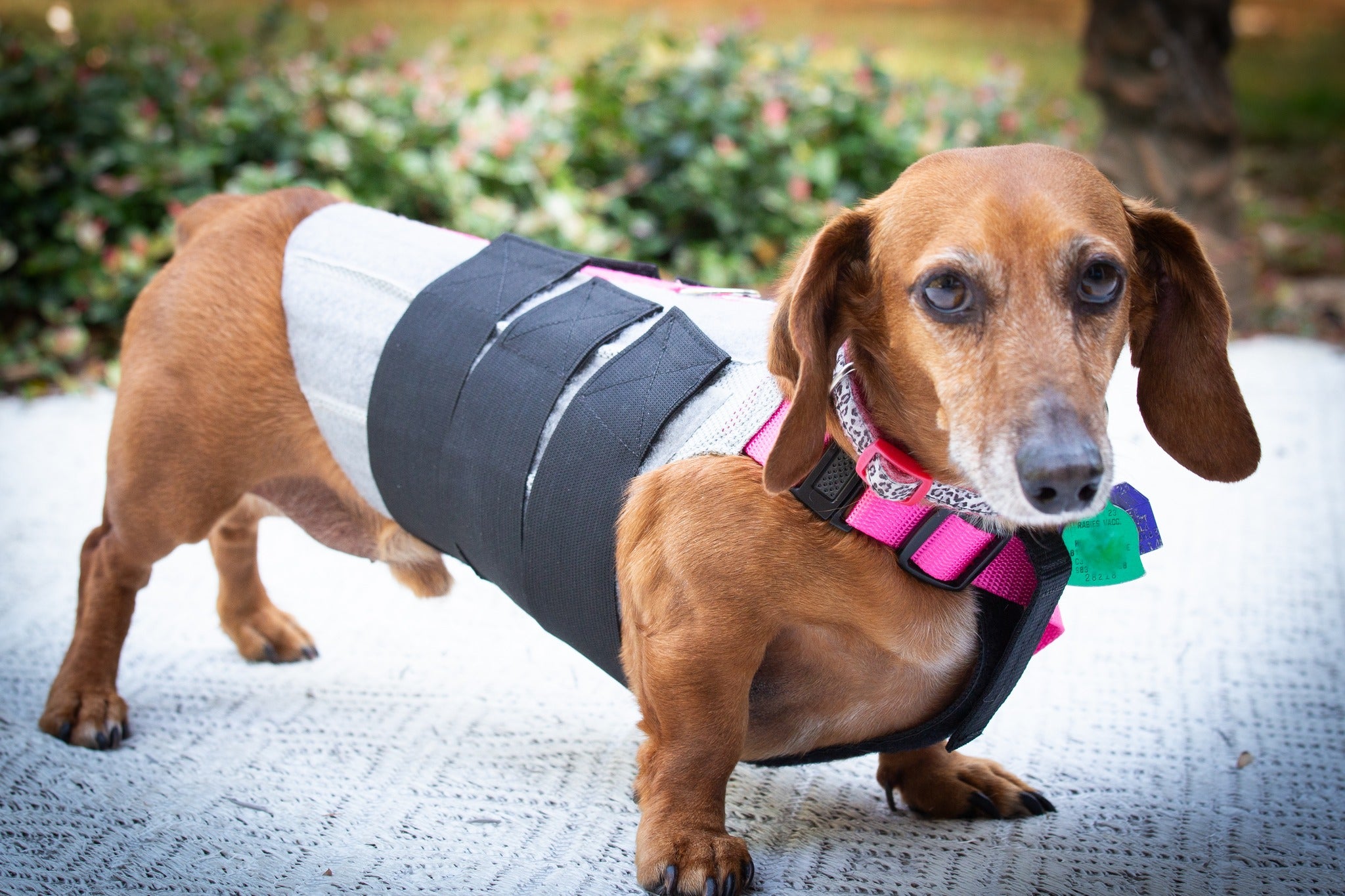
Long-backed breeds often benefit from controlled spinal support during recovery and walks.
IVDD Warning Signs Dog Parents Should Not Ignore
IVDD happens when discs between the vertebrae bulge or rupture and press on the spinal cord. Symptoms can appear gradually or overnight. Watch for:
- A hunched or “roached” back with tight neck or back muscles
- Shivering, crying, or guarding when you touch the spine
- Reluctance to jump on furniture, climb stairs, or play rough
- Dragging toes, knuckling, or wobbly hind legs
- Lower appetite, low energy, or bathroom accidents in more serious cases
- Partial or full paralysis in one or more limbs (emergency)
Any sudden neurological change is a vet-now situation. A brace is supportive care—not a substitute for diagnosis, pain control, or surgery when those are needed.
Why Stabilizing the Spine Helps During Recovery
Extra twisting and sharp turns can inflame tissue and aggravate disc pressure. Limiting that side-to-side “wiggle” while still allowing gentle walking is the idea behind quality dog back braces. Owners of active dachshunds often notice that soft generic wraps slip or fail to control lateral motion—the exact movement that tends to hurt most.
How the WiggleLess Back Brace Fits This Problem
WiggleLess is a USA-made brace designed by specialists in orthotics and veterinary care. Key points from the brand’s approach:
- Side struts for lateral support, not only top-to-bottom wrap pressure
- Adjustable “back-pack” fit for long, barrel-chested, or slim-waisted dogs
- Cool mesh and color options for realistic daily wear
- Leash D-ring so walks stay practical
- Positioned as support for IVDD-related discomfort, DM-related proprioception needs, and general back strain
Many buyers start the brace during crate-rest or post-play recovery windows, then use it on walks once their dog accepts the feel. Some dogs freeze for a minute when it first goes on—positive reinforcement usually solves that quick.
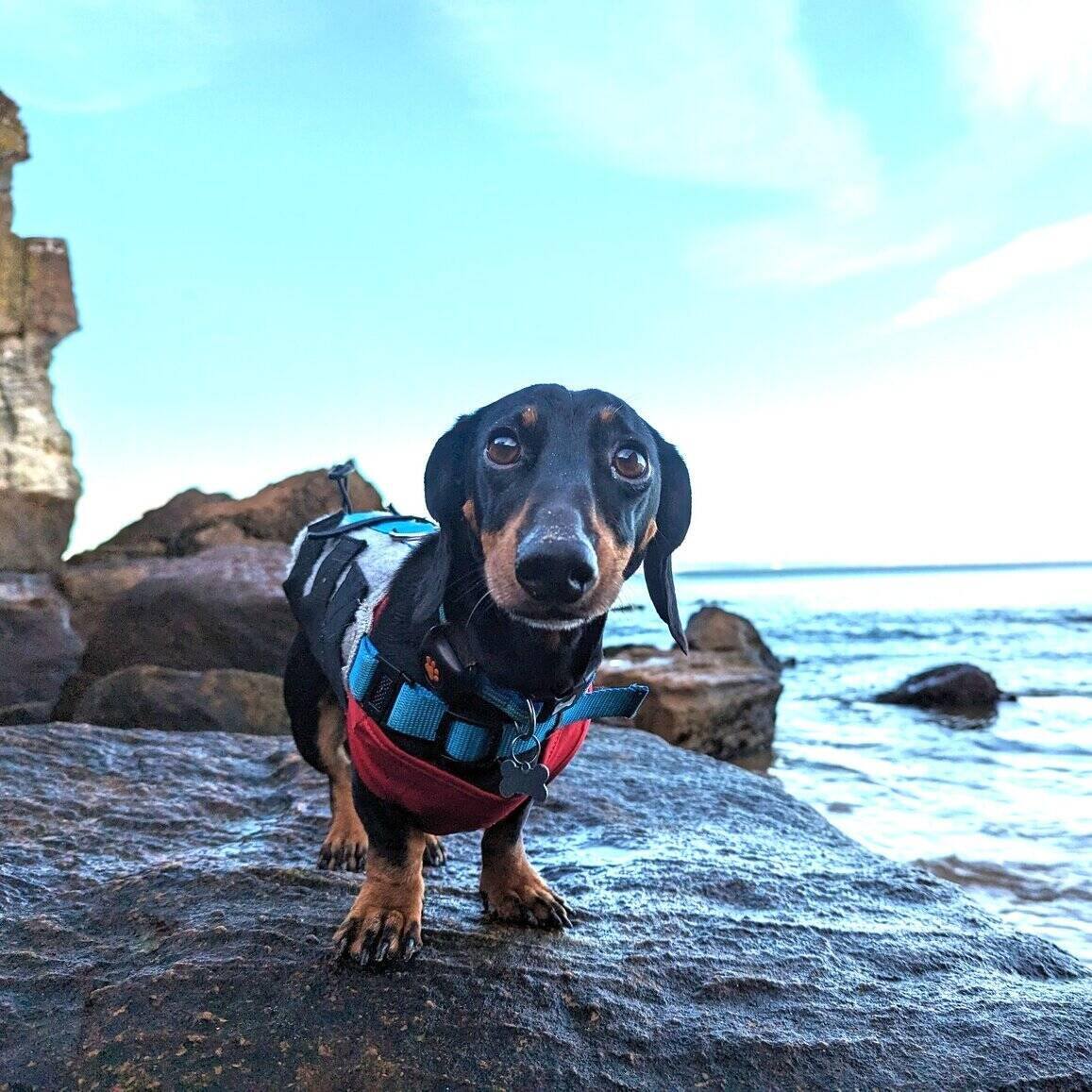
Support that works outside the crate: walks, gentle activity, and daily life.
Practical Tips If You Suspect IVDD
- Call your veterinarian before adding any brace or supplement plan.
- Reduce jumping and roughhousing immediately—use ramps and carry when needed.
- Measure carefully for brace size; between sizes, many owners size up.
- Introduce the WiggleLess brace in short indoor sessions first.
- Pair bracing with whatever rehab your vet recommends (rest, laser, meds, hydrotherapy).
Quick Takeaway
Early IVDD signs deserve a professional exam. For dogs cleared for supportive bracing, WiggleLess focuses on stability, side support, and an adjustable fit—especially useful for long-backed companions who still want to explore. Check current sizes, colors, and pricing (typically around $139) on the official store: