Sleep apnea therapy is most useful when you can use it consistently. If the mask feels unstable or the neck is sore, review the pillow setup alongside your equipment and bedtime routine. Comfort improvements often come from a few practical details rather than one dramatic change.
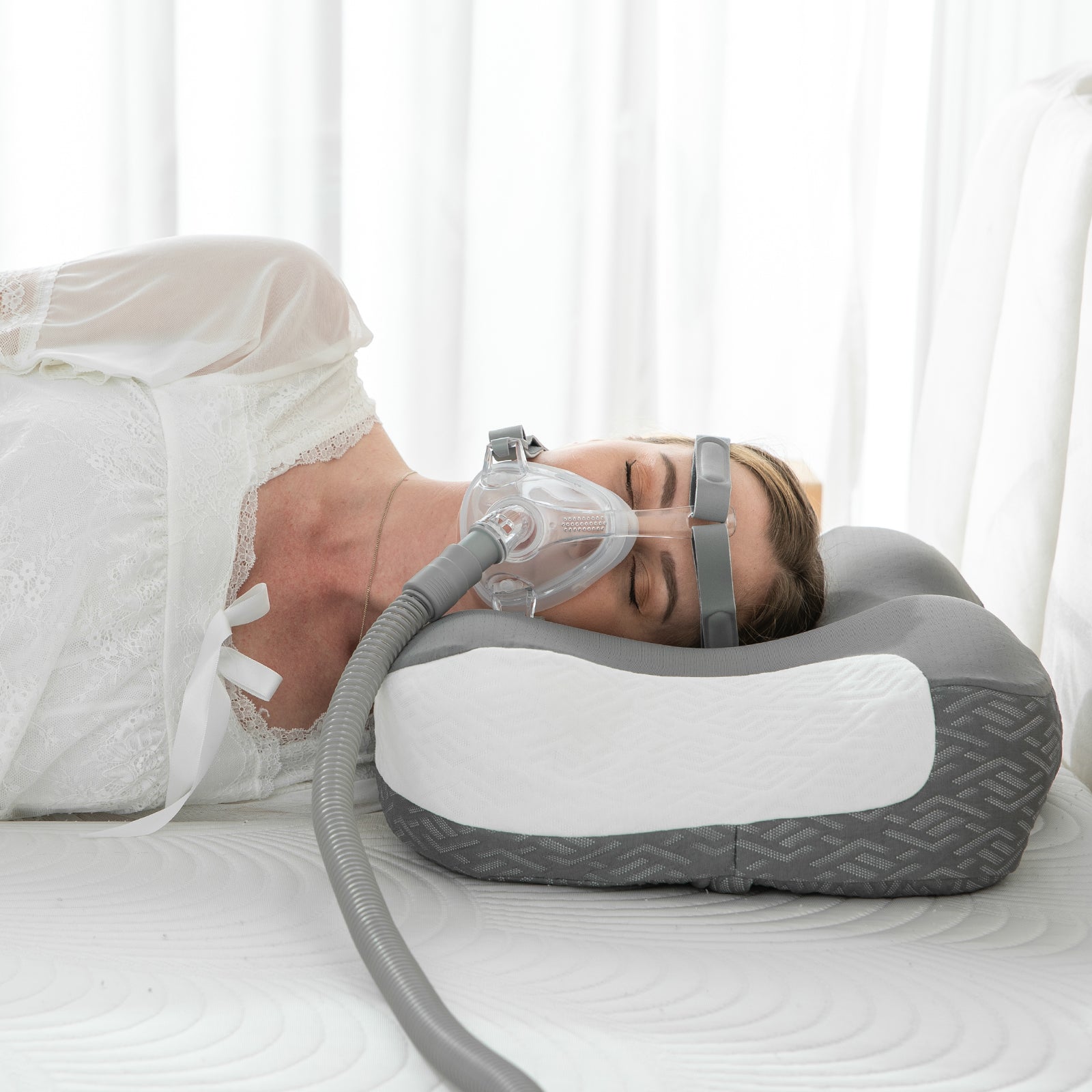
Build the setup around your position
Side sleepers need shoulder space and a route for the hose. Back sleepers need stable, moderate support without pushing the chin forward. Combination sleepers may prefer adjustable fill and a contour that works in more than one position.
Keep the environment calm
Use a cool, dark room, maintain a regular schedule and place the CPAP machine on a stable surface below or beside the bed as recommended. Keep tubing away from sharp edges and make cleaning part of the routine.
Measure progress by therapy and comfort
Notice whether you keep the mask on longer, wake less often and feel more refreshed. If snoring, gasping, daytime sleepiness or large leaks continue, share the data with your sleep team. Do not change pressure settings without medical guidance.

A pillow can support comfort, but effective sleep-apnea treatment still depends on correctly prescribed and fitted CPAP equipment.
Affiliate disclosure: The images contain affiliate links. We may earn a commission from qualifying purchases at no extra cost to you.